What students say

Dr. Borbála Széles
2020 Doctoral Programme Graduate
“The experimental catchment of the Doctoral Programme, the Hydrological Open Air Laboratory HOAL, is one of the most well-instrumented catchment around the world which allows PhD students of the Programme to research interdisciplinary topics, ranging from flood generation through nutrient transport to vegetation dynamics. My PhD research focused on the HOAL by understanding and simulating different runoff generation mechanisms. ”

Zahra Majid
PhD student
“The study programmes really opened my mind to other research disciplines and allowed me to appreciate other fields.”
Ali Obeid
PhD student
“I find the cluster groups are really helpful and give me close contact to my supervisors and other researchers. We meet once a month and update each other on what we’re doing. As we’re a mixed discipline group of engineers and microbiologists this really helps my research.”
Doctoral Programme › How it works
Excellent education through cutting edge research, interdisciplinary science and an international perspective are at the heart of the Vienna Doctoral Programme on Water Resource Systems.
One-on-one mentoring with leading research supervisors
The PhD degree is awarded on the basis of a thesis, supplemented by an oral examination. The thesis must form a distinct and original contribution to knowledge, a substantial revision of existing views, or a development of new methods of research and analysis. Doctoral Programme students must achieve publication of four research papers in peer reviewed, international science journals. Students work closely with the internationally reputed staff of the Programme to identify and achieve research objectives and prepare scientific manuscripts.
Broad basic study programme
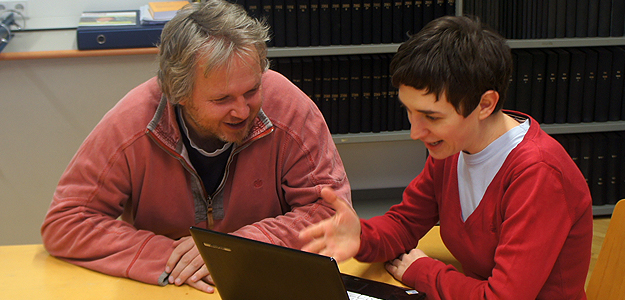
To introduce an understanding of a broad range of water science topics and methods all research students take basic courses taught by the expert members of the Programme faculty. Lecturers employ teaching strategies such as cross relating associated subjects, visually explicit teaching and learning by doing to ensure that all students achieve a basic understanding of key concepts, methods and approaches. Courses cover: resource and river basin management, modelling and simulation methods, socio-economic concepts, health related water quality targets and urban water management, introduction to earth observation, and basics for stochastic mechanics.
Tailor-made advanced training programme
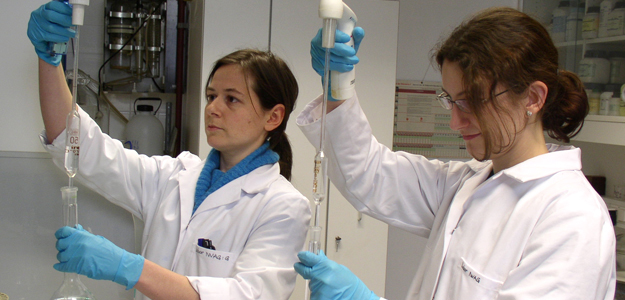
Students identify critical training needs and develop their own advanced study programme in consultation with their supervisors. These courses give students a deep understanding of advanced scientific methods in a range of fields. Courses options include: resource management design, structural optimisation, isotope hydrology, case studies of integrated water resource analyses, applied earth observation, methods in aquatic molecular ecology and microbial diagnostics.
Globally renowned guest lecturers
Courses and seminars delivered by globally renowned guest lecturers give students the opportunity to learn about methods and approaches developed and applied by research centres from around the world. Seminars cover the breadth of topics included in the Programme. Block courses and summer schools include: modelling the fate of microbes in aquatic habitats, water economics and governance, risk in engineering and water sciences, coupled models of the hydrosphere, and computational methods for stochastic analysis.
Critical skills training
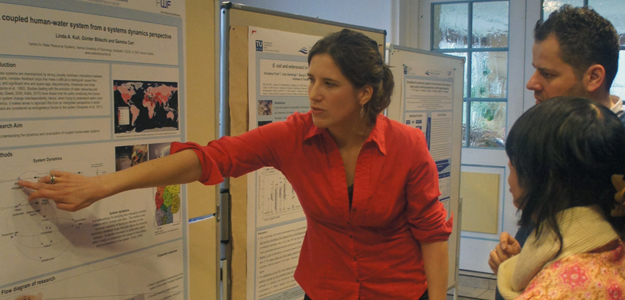
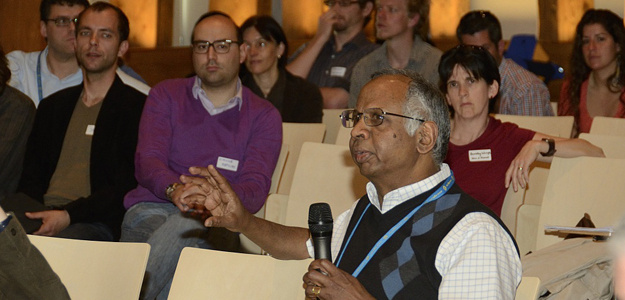
During the first semester, each student prepares a thesis proposal outlining their research topic, questions and methods. They must present and defend this to their peer group. This experience provides opportunity to develop writing and presentation skills. Additionally, key generic skills such as project management, scientific writing, presentation and communication, and group leadership are developed through workshops and training sessions.
Interdisciplinary research cluster groups
Each student belongs to at least one interdisciplinary research cluster group. Frequent meetings and working groups provide a forum to develop cross-disciplinary science questions and research strategies. Students regularly present their ongoing work, discuss research challenges, gain new ideas for approaches and analysis methods, and develop their communication skills in an interdisciplinary setting.
Interactive annual symposium
An overnight research meeting attended by all students, associated post-docs, faculty and the external advisory board is held annually at a retreat outside Vienna. The symposium gives each student the opportunity to report on their progress and present and defend their research plan for the following year. Cross disciplinary discussion sessions and team-building activities make this a highly interactive event.